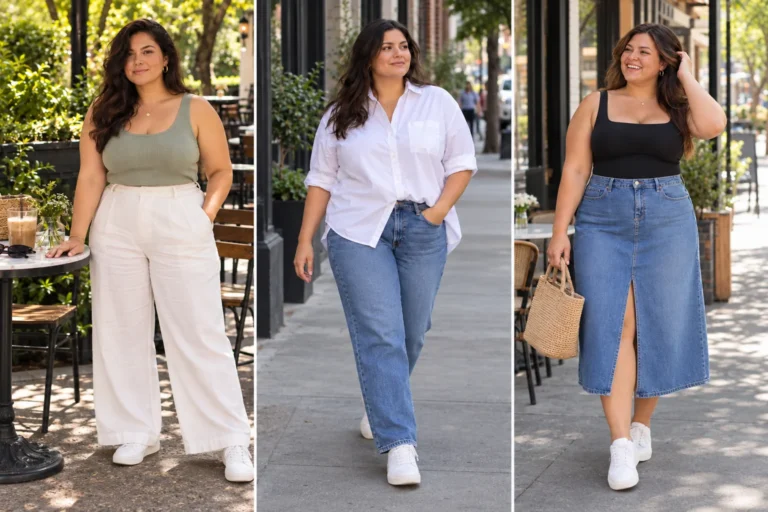
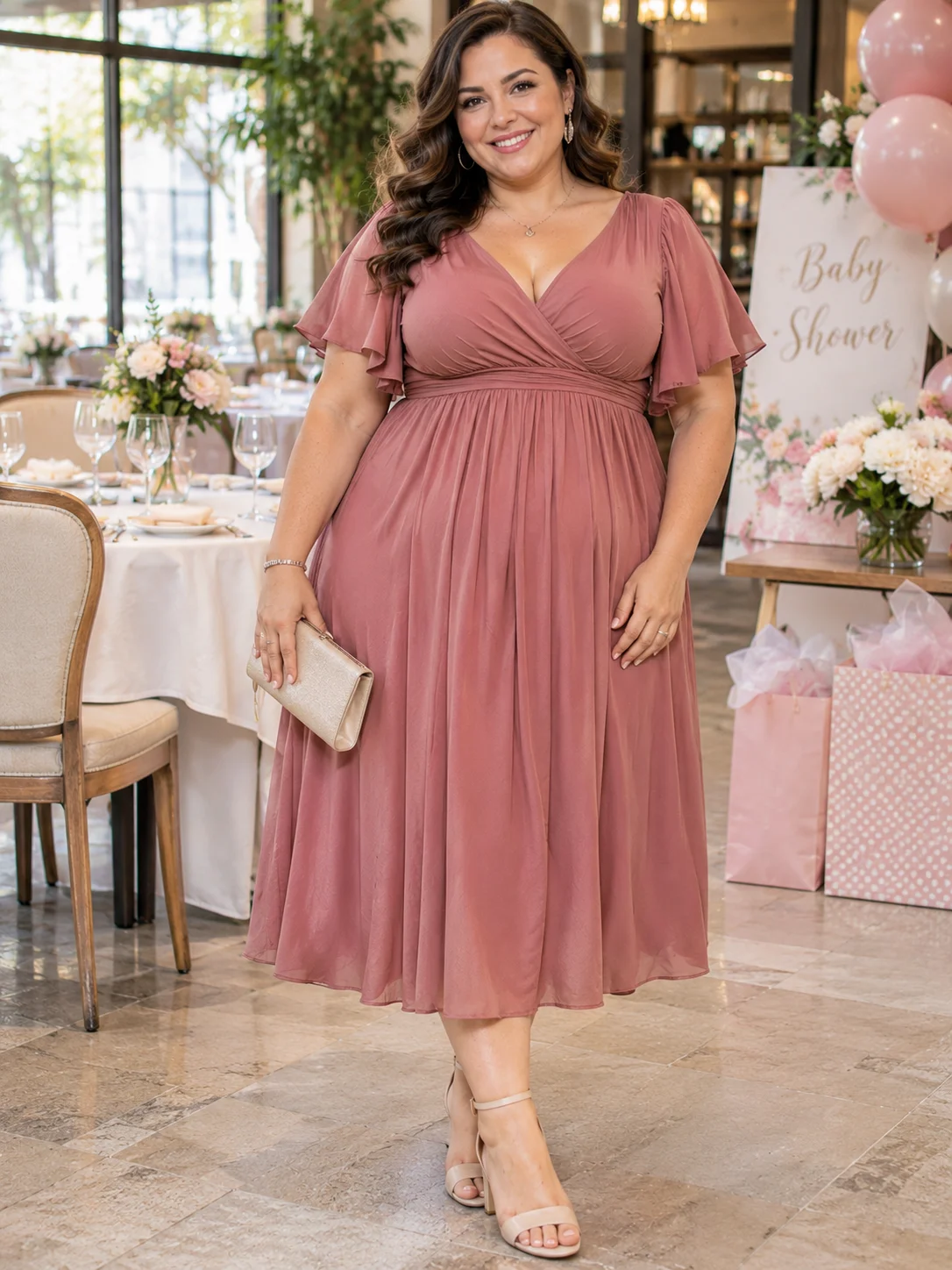
Plus Size Baby Shower Guest Outfits: Compare 8 Styles

You’re standing in front of your closet holding a cute pastel invitation that tells you the date, the time, and the registry, and absolutely nothing about what to wear.
Will you be on a folding lawn chair in 80-degree heat? Or wedged into a restaurant booth for three hours of brunch, games, and gift-opening?
So you scroll saved outfit photos for ideas. The problem is that a photo shows how a dress looks standing still for five seconds.
It doesn’t show how the hem rides up when you sit, how the buttons pull across the bust when you lean in to pass a gift, or how the skirt creases after two hours on a chair.
That’s why this guide works a little differently. Before picking a silhouette, anchor your choice in three things: the venue, the season, and how long you’ll be sitting. Once those are settled, the right plus size baby shower guest outfits get much easier to spot, and the wrong ones rule themselves out.
Start With Your Real Priority: Venue, Season, and Sitting Comfort
Most baby showers fall into a few types, and each one quietly points you toward a different kind of outfit.
- Outdoor lawn, garden, or park. Grass, uneven ground, sun, and maybe wind. You’ll want breathable fabric, a hem that clears the ground, and shoes that won’t sink. Skirts with a lot of loose volume need a plan for breezy moments.
- Upscale restaurant or tearoom. Here you’re seated for most of the event, often through several courses. A waistband that feels fine at noon can feel tight by 2 p.m. Stretch, a forgiving waist, and fabric that doesn’t crease badly in the lap matter more than anything else.
- Someone’s home. These are usually the most relaxed, but they can involve the most movement. You might help in the kitchen, sit on a low sofa, or perch on a floor cushion for games. Coverage while bending and leaning becomes the priority.
- Co-ed or evening showers. Backyard BBQs, breweries, and hotel lounges are more common than they used to be. Daytime light favors soft colors and texture, while evening settings let you wear a little sheen or a darker palette.
Then layer the season on top. Summer pushes you toward airy natural fibers. Fall and winter mean you’ll go from a cold parking lot to a warm dining room, so layers you can remove become useful.
Finally, be honest about sitting time. If gift-opening alone could run an hour, skip anything you can only tolerate standing up. For more everyday comfort-first ideas beyond showers, our plus size outfits collection is a good place to browse.
1. True Wrap Dresses vs. Faux-Wrap Midi Dresses
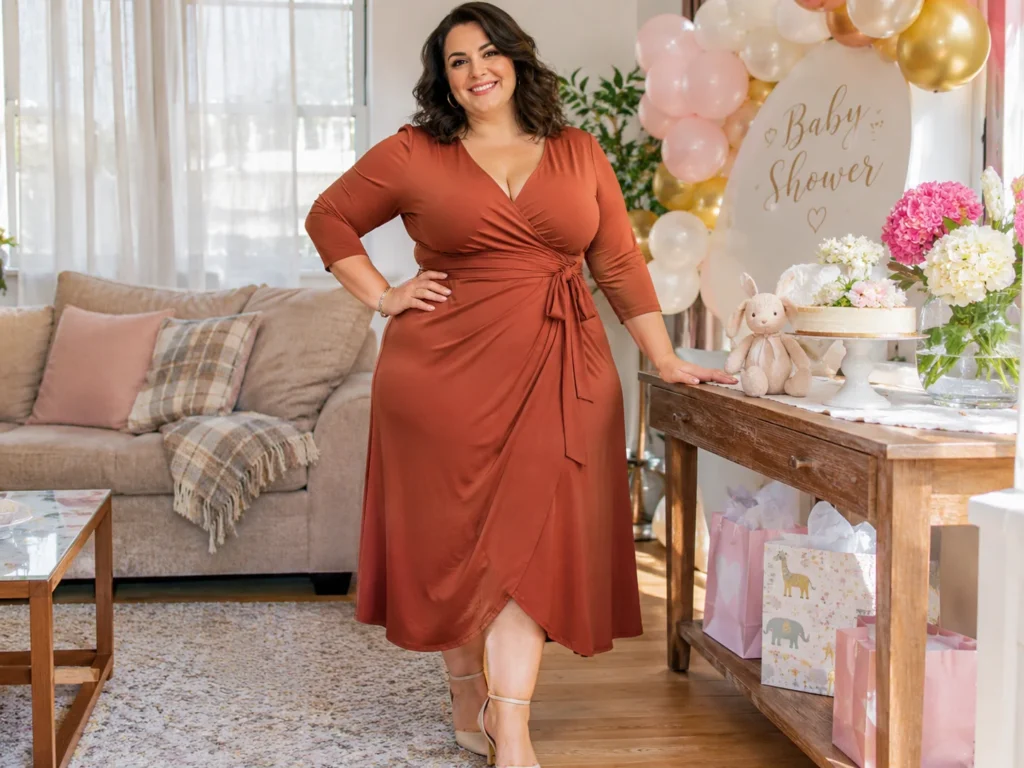
A true wrap dress has one panel that crosses over the other and ties at the waist. You control how snug it is, which makes it adjustable through the bust and waist. A faux-wrap looks the same from the front, but the crossover is sewn closed, often with a pull-on waist or a side zipper.
Both create a V-neck and a defined waist, which draws the eye upward and toward the center. The difference shows up when you move.
This comparison matters most at a home shower in a living room, where you’ll lean forward to play diaper-raffle games at the coffee table or hand gifts across a sofa. A true wrap in matte jersey drapes beautifully but can loosen as the tie relaxes. A faux-wrap in crepe stays exactly where it was sewn.
The Real-World Tradeoff: True wraps can gape at the bust when you bend, and the skirt panel can open when you sit with crossed legs. Faux-wraps can’t be adjusted, so if the crossover point sits too low for your bust, there’s no fix besides a tailor or a camisole.
Fit & Shopping Check: On a true wrap, look for an inner tie or snap at the bust line. It holds the under-panel in place so only the outer tie does the shaping. On a faux-wrap, check where the crossover seam lands. It should sit at or just below the center of your bra band, not lower.
2. Smocked Bodice Midi Dresses vs. Tiered Cotton Maxi Dresses
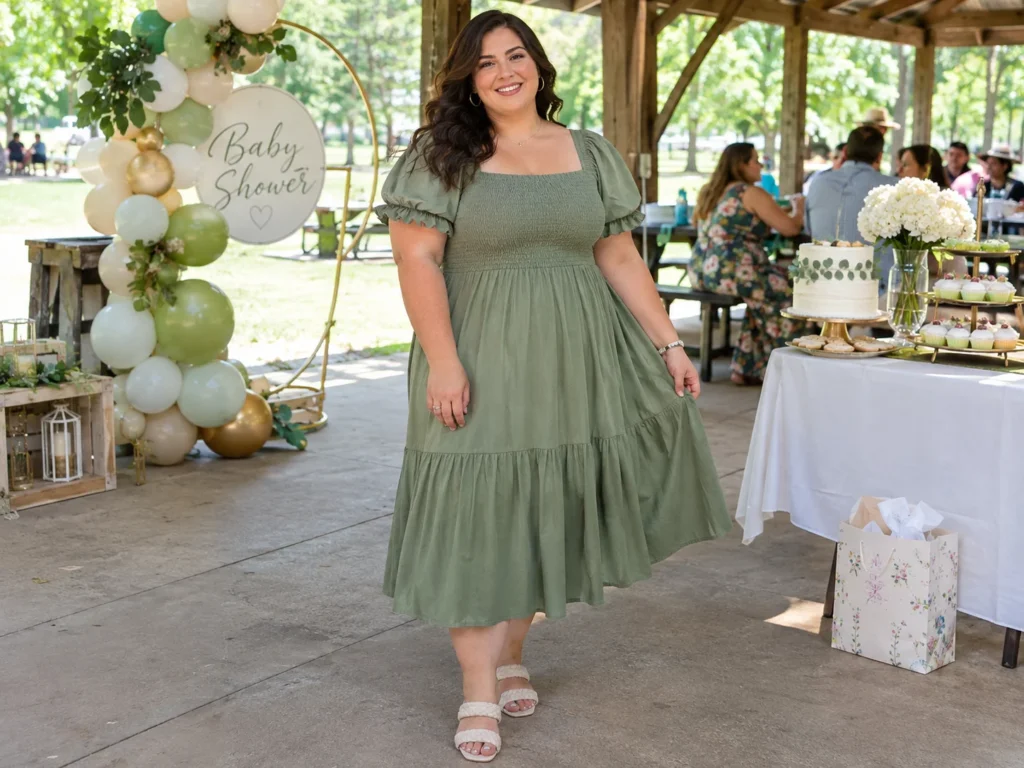
A smocked bodice uses rows of shirred elastic stitching to grip the ribcage and bust, then releases into a skirt. It stretches with you, which is helpful if your bust or ribcage size changes over a day or a month. A tiered maxi, on the other hand, builds volume through stacked horizontal panels, each one fuller than the last.
Smocking gives shape through stretch. Tiers give shape through flow.
Picture a park pavilion shower with picnic tables and a playground nearby. A butter-yellow tiered cotton maxi looks sweet and relaxed, but open parks catch wind, and those tiers fill like a sail. A sage smocked midi keeps things closer to the body and stays put when the breeze picks up.
The Real-World Tradeoff: Smocking that’s too tight puckers and creates horizontal bands across the torso. Tiered maxis can overwhelm a shorter frame, and the bottom tier picks up grass clippings and dirt on park lawns.
Fit & Shopping Check: For smocking, look at the photos of the relaxed panel next to the stretched panel, or check the size chart for both measurements. You want it to stretch comfortably around your ribcage without being at its limit. For tiered maxis, fewer, flatter gathers keep the volume under control.
3. Wide-Leg Jumpsuits vs. Tailored Trouser Co-Ord Sets
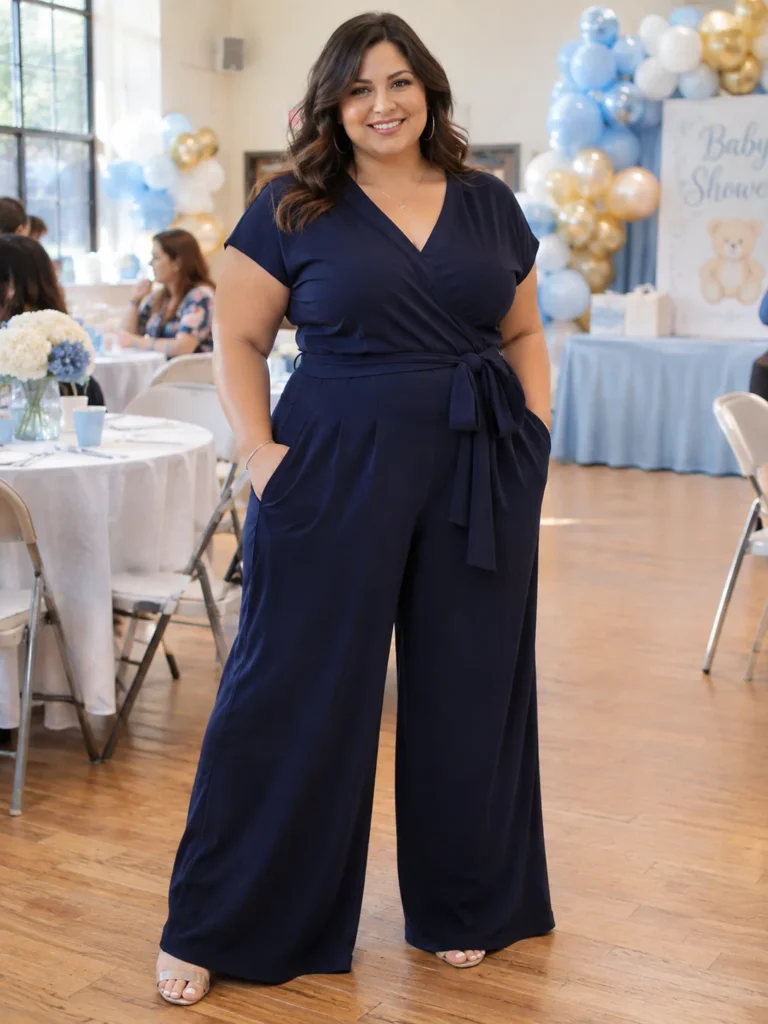
A wide-leg jumpsuit is one continuous piece, usually in a fluid crepe or modal. Because the color runs unbroken from shoulder to ankle, it creates a long vertical line that elongates the leg. A co-ord set gives you a matching top and trouser in the same fabric, so you get nearly the same line in two pieces.
Both look polished without feeling formal.
This pairing works well for a church hall or community center shower, where guests often arrive early to help set up tables, hang garlands, and carry trays. You’ll be reaching, bending, and walking around a lot. A navy modal jumpsuit moves softly and feels comfortable all day. A plum crepe co-ord lets you go to the restroom easily and swap the top later for something else.
The Real-World Tradeoff: Jumpsuits mean full undressing for every bathroom break, which gets old over a four-hour event. Co-ord tops can ride up when you lift your arms to hang decorations, showing a strip of midriff.
Fit & Shopping Check: For jumpsuits, torso length is everything. If it pulls at the shoulders when you sit, the torso is too short. A back zipper usually gives a cleaner fit than a side zip. For co-ords, choose a top that falls at least a few inches below the trouser waistband.
4. Floral Chiffon A-Line Dresses vs. Linen-Blend Sundresses
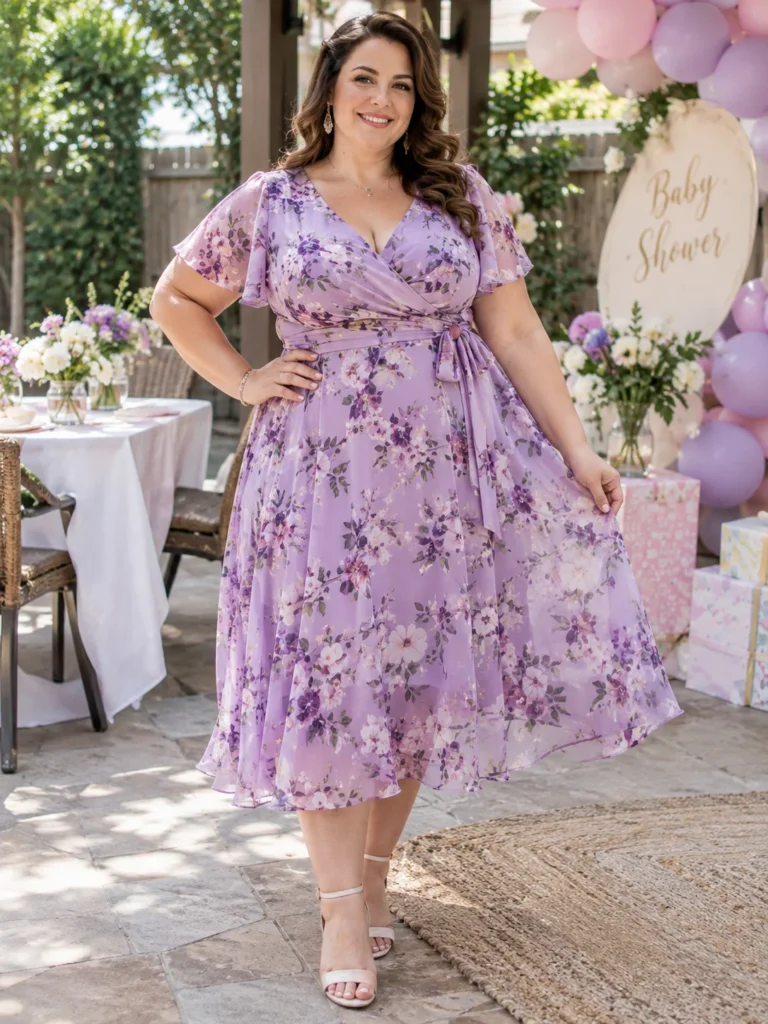
An A-line chiffon dress fits at the bodice and flares gently from the waist, and the soft fabric floats as you walk. A linen-blend sundress usually has a simpler shape, like wide straps and a relaxed skirt, with a matte, slightly textured surface.
Chiffon reads dressier. Linen reads relaxed and summery.
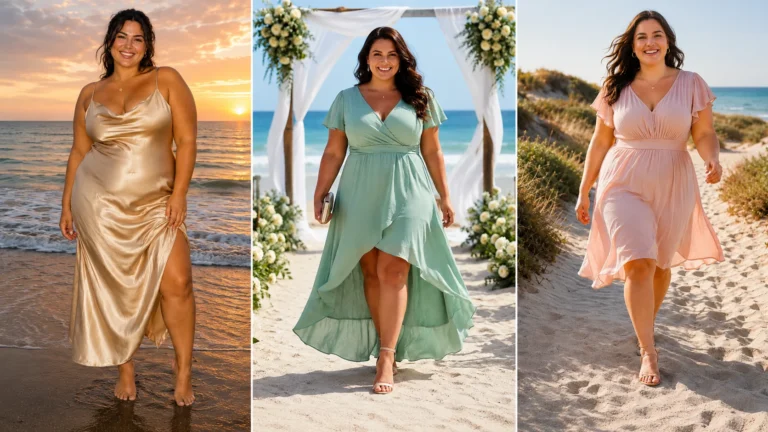
For a mid-July backyard patio shower, the difference is comfort. A lavender floral chiffon looks lovely in photos, but most chiffon is polyester, and it can feel warm against the skin once the sun is high. A chambray-blue linen blend lets more air through and feels cooler, especially if you’re near a grill or sitting in direct sun.
The Real-World Tradeoff: Chiffon linings are often shorter than the outer layer, and in bright sunlight the bottom few inches can turn see-through. Linen wrinkles fast, especially across the lap and the back of the skirt after sitting.
Fit & Shopping Check: Hold any chiffon dress up to a window or bright lamp and check how far the lining goes. It should reach close to the hem. For linen, look for a blend with cotton or viscose on the label. Blends usually crease more softly than pure linen.
5. Ribbed Knit Sweater Dresses vs. Midi Skirt + Fine-Knit Cardigan Sets
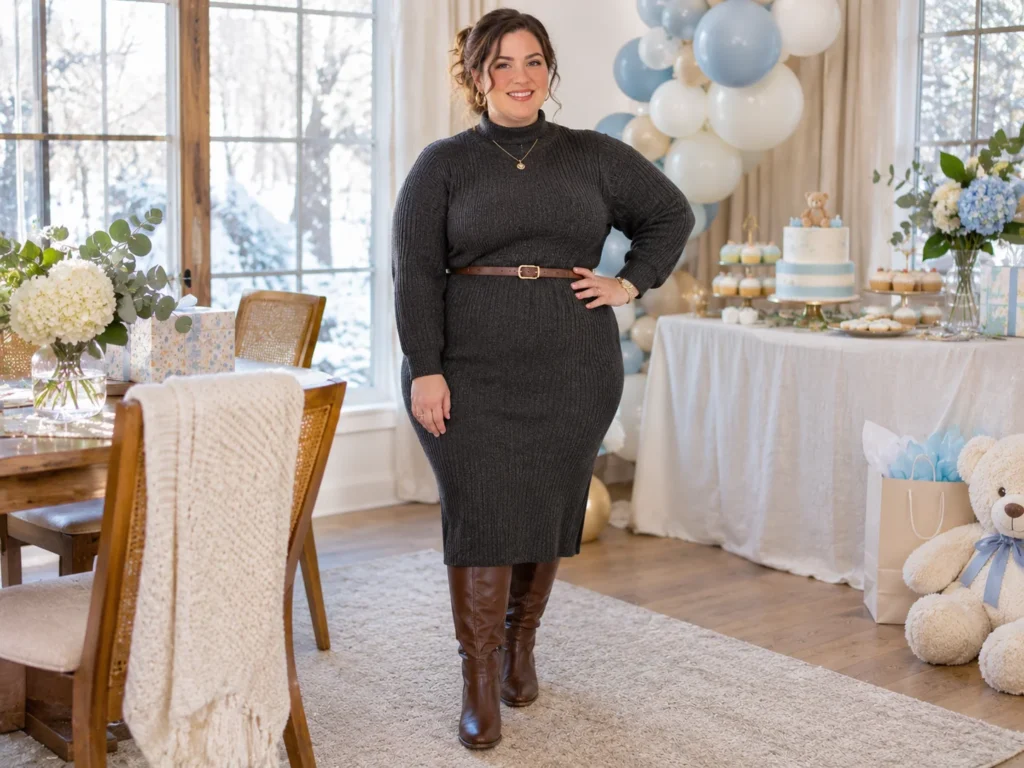
A ribbed sweater dress is one warm, stretchy layer from neck to calf. The vertical ribs create long lines, and the knit hugs the body. A midi skirt and fine-knit cardigan set splits the warmth into pieces you can add or remove.
One is simple. The other is flexible.
Fall and winter showers bring a specific problem: you walk in from a freezing parking lot, and twenty minutes later you’re in a warm dining room with a crowd of people. A charcoal sweater dress is cozy on arrival but has no way to cool down. A camel cardigan over a burgundy pleated midi skirt and a thin tee lets you take the top layer off once the room warms. For the walk in, add one of these plus size winter coats that won’t crush a knit.
The Real-World Tradeoff: Ribbed knits cling and show every undergarment line, and they can feel too warm in a heated room. Skirts in cardigan sets tend to twist around the body as you walk, moving the side seam to the front.
Fit & Shopping Check: Stretch a section of the sweater dress and let it go. It should snap back without staying baggy. On skirts, look for an attached lining, which helps stop twisting and clinging to tights.
6. Structured Fit-and-Flare Dresses vs. Empire-Waist Midi Dresses
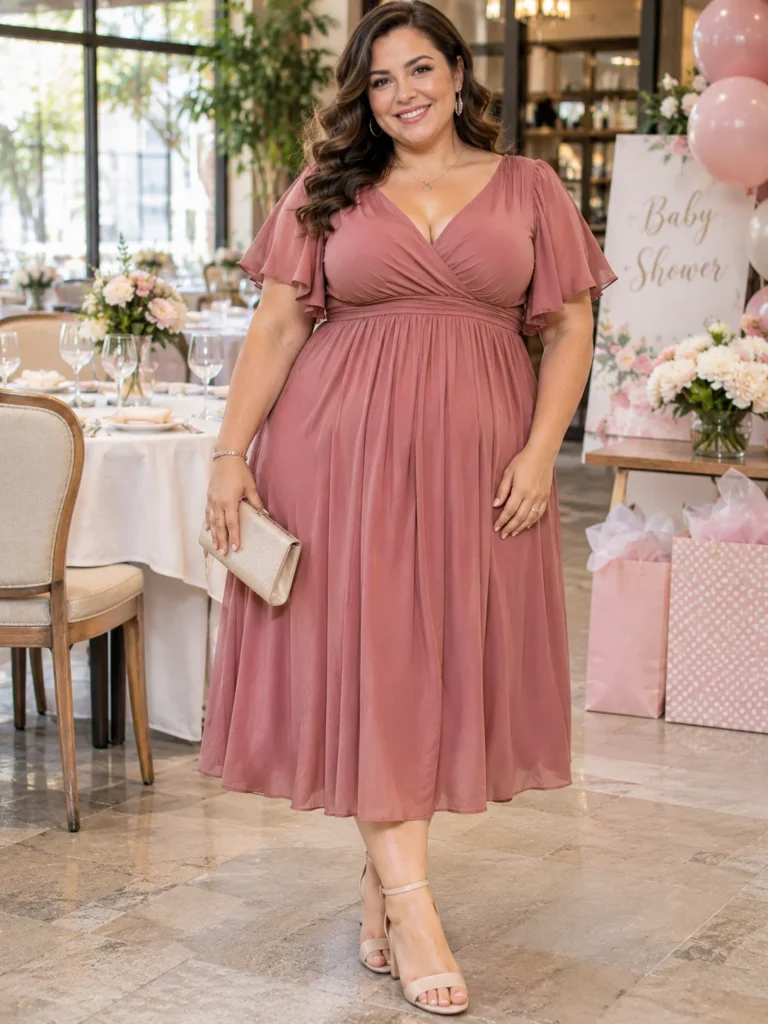
A structured fit-and-flare has a fitted bodice, a seam at the natural waist, and a full skirt. It creates a clear hourglass outline. An empire-waist dress places its seam just under the bust and lets the skirt fall straight from there, skipping the waist entirely.
This one comes down to what happens after the second course.
At a restaurant brunch where pastries, mains, and cake arrive over two or three hours, a fixed waistband slowly starts to press. An emerald fit-and-flare looks sharp when you sit down, but a structured waist doesn’t give. A dusty rose empire midi leaves your midsection free, so you’re still comfortable when the gifts come out.
The Real-World Tradeoff: Fit-and-flare waists can dig in after eating, and stiff bodices make it hard to lean back in a booth. Empire waists can look shapeless if the skirt is too wide. There’s also the small chance of looking like the guest of honor’s maternity dress, so keep the skirt draped rather than full.
Fit & Shopping Check: On a fit-and-flare, make sure the waist seam sits at your actual natural waist, not above it. A partial elastic back makes a big difference. If your midsection is where you most want ease, the shaping tricks in these plus size outfit ideas for a big stomach work well for dressier styles too.
7. Polished Casual for Co-Ed Showers: Peplum or Wrap Blouse + Dark Wide-Leg Jeans vs. Ponte Knit Trousers
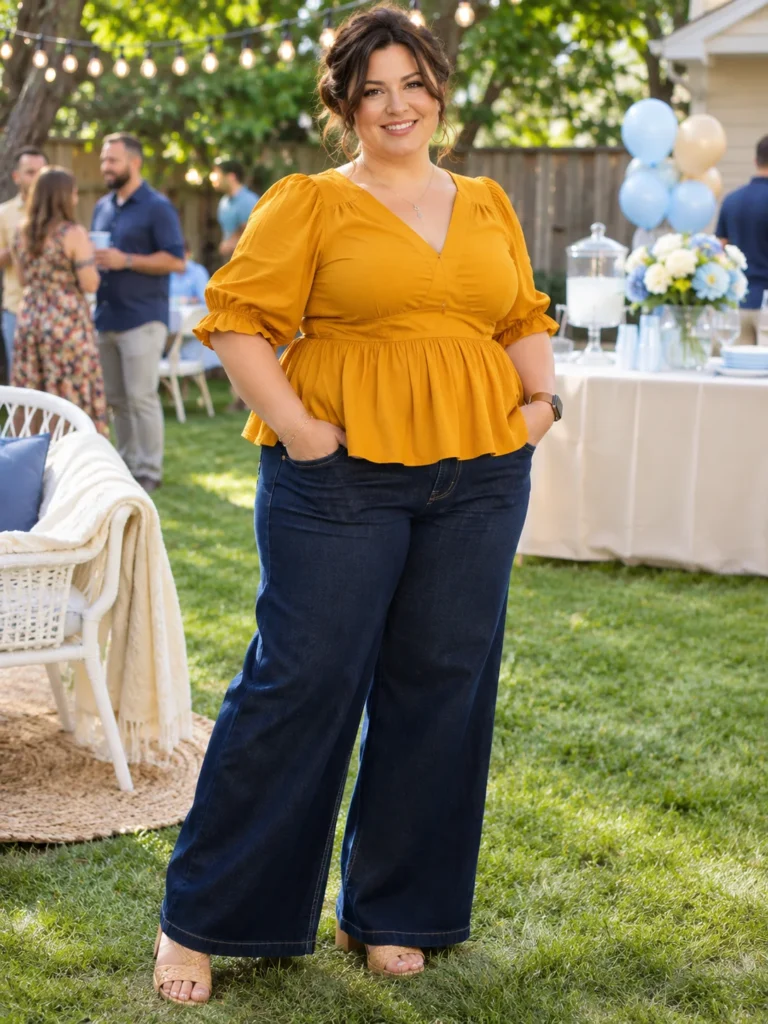
Not every shower calls for a dress. Co-ed parties at a backyard BBQ, a brewery patio, or a casual house gathering often make a dress feel overdressed. A peplum or wrap blouse with dark wide-leg jeans gives you shape up top and a long, grounded line below. Ponte knit trousers do something similar but with a smooth, stretchy, slightly thick knit.
Jeans feel casual and familiar. Ponte feels a little more pulled together.
At a brewery shower with picnic benches, a marigold peplum and dark indigo wide-leg jeans look relaxed and festive. For a backyard BBQ at a relative’s house, a printed wrap blouse over black ponte trousers gives you the same comfort with a slightly cleaner finish. These plus size denim outfits have more ideas for dressing jeans up.
The Real-World Tradeoff: Rigid denim digs into the stomach when you sit on low benches. Ponte can pill on the inner thighs over time, and thin ponte can look like leggings rather than trousers.
Fit & Shopping Check: Check the denim label for some elastane in the blend. Even a small amount helps when sitting. For ponte, pinch the fabric. It should feel thick and smooth, not thin and see-through.
8. Cotton Eyelet Dresses vs. Bias-Cut Satin Slip Skirts With Knit Tops
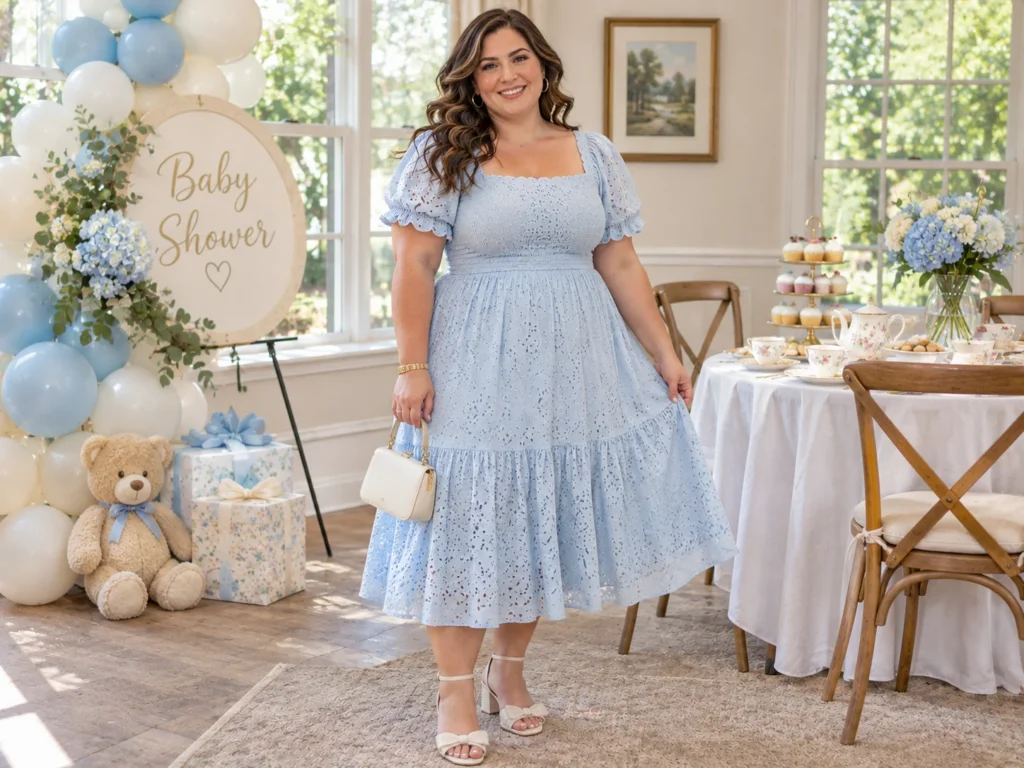
Eyelet is cotton fabric with small embroidered holes punched in a pattern. It’s crisp, textured, and very daytime. A bias-cut satin slip skirt is cut diagonally across the fabric grain, so it drapes and skims over the hips with a soft sheen. Paired with a fitted knit top, it moves from day into evening.
One feels like a garden tea. The other feels like a hotel lounge.
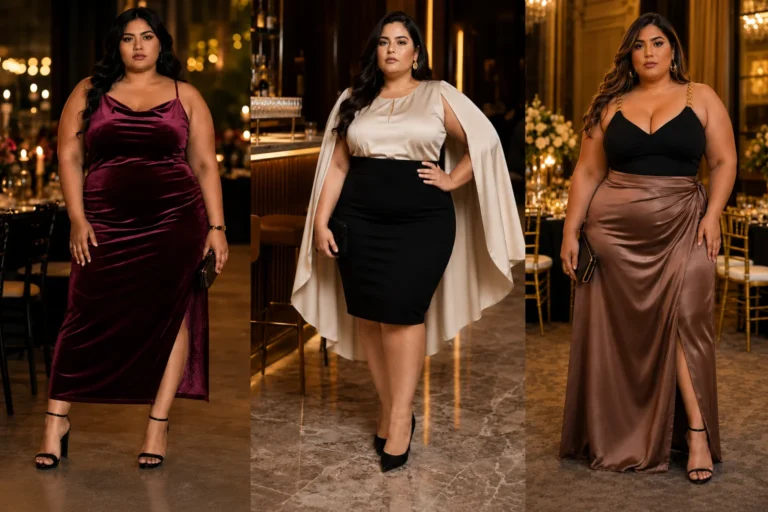
For an afternoon tea party with tiered sandwich trays and floral teacups, a pale blue eyelet midi feels right at home. For an upscale evening shower at a hotel bar or rooftop lounge, a champagne satin slip skirt with a black fine-knit top looks quietly dressy without trying too hard.
The Real-World Tradeoff: Eyelet is fairly stiff and can stand away from the body, and unlined eyelet shows skin through the holes. Satin shows creases from sitting, marks from water drops, and can cling across the hips and thighs.
Fit & Shopping Check: Eyelet should be fully lined, ideally in a color close to your skin tone or the fabric. For satin skirts, choose a wider elastic or a smooth zip waist, and a seamless slip underneath helps the fabric glide instead of grip.
How Fabric Weight, Hemline, and Color Choices Change Comfort and Photos
- Hemlines on grass. Floor-length hems drag through grass, collect dew, and catch on chair legs. A mid-calf hem clears the ground while still covering the legs, and it’s easier to walk in on uneven lawns. For indoor showers, longer hems are fine, but you’ll still want to check whether they catch on heels.
- Fiber and weave in warm venues. Natural fibers like cotton, linen, and modal generally feel cooler than polyester chiffon, but the weave matters too. Textile researchers interviewed by the Associated Press note that a looser, more open weave usually breathes better than a dense one, even if the fiber is the same. Their advice is to pick lightweight clothing that lets air reach the skin so sweat can evaporate. REI’s guide to choosing breathable fabrics also breaks down how common warm-weather fabrics compare.
- Fabric weight. Lightweight fabrics breathe but can cling or show undergarments. Medium-weight knits like ponte or crepe skim the body more smoothly. Heavy knits keep you warm but can feel stuffy indoors.
- Color and print in daylight. Daylight is honest. Pastels and soft brights look fresh outdoors, while very pale shades can wash out in harsh midday sun. Medium-scale prints usually read clearly in group photos, while tiny prints blur into a single tone and very large prints can dominate the frame.
- Photos with the group. You’ll likely be in a group photo with the mom-to-be. Solid jewel tones and soft mid-tones tend to photograph well together, and avoiding neon helps keep the focus on her.
Baby Shower Dress Code Etiquette and All-Day Comfort Checks
- White and cream. Unlike weddings, there’s no firm rule against white at most baby showers. That said, some moms-to-be wear white or cream themselves, so it’s kind to ask. Soft pastels, warm neutrals, and florals are safe choices.
- Not too clubby, not too casual. Skip anything you’d wear to a nightclub, like very short hems, heavy sequins, or deep cutouts. On the other end, gym leggings and hoodies usually feel too casual unless the host says otherwise.
- Themes and color coordination. Many showers now have a theme or a color palette, especially gender-neutral or gender reveal events. A quick text to the host can save confusion. If there’s a color theme, matching one accent like a cardigan or shoes is usually enough.
- Anti-chafing under skirts. Long hours of sitting and walking in a dress can cause thigh chafing, which is skin irritation from skin rubbing against skin or fabric. Lightweight anti-chafe shorts help. Consumer Reports also suggests a thin layer of petroleum jelly or an anti-chafing product on areas that rub together.
- Shoes on grass. Block heels and flat sandals spread your weight and sink less into lawns. Wedges also work on grass. Thin stilettos tend to dig in and make every step a little wobbly.
- Bags and gifts. Carry a crossbody so your hands are free for gifts, plates, and photos.
Questions to Answer Before You Buy Your Outfit
Before ordering online or heading to the store, settle these six questions:
- Is the shower indoors or outdoors? This decides your fabric, hem length, and shoes.
- What’s the season and expected temperature? Plan for both the drive and the room.
- How long will I be sitting? If it’s more than an hour, choose stretch or a forgiving waist.
- Is there a theme, color palette, or dress code? Ask the host if the invitation doesn’t say.
- What will I wear underneath? Check that your bra, slip, or anti-chafe shorts work with the neckline and fabric.
- Can I wear it again? An outfit that works for brunches, birthdays, or church makes the purchase more worthwhile.
Quick Comparison: Which Baby Shower Outfit Fits Your Invite?
| Outfit Style | Best Venue / Season | Key Practical Advantage | Main Tradeoff |
|---|---|---|---|
| True wrap vs. faux-wrap midi | Home showers, spring | Waist definition, V-neck shaping | Gaping or fixed crossover |
| Smocked midi vs. tiered maxi | Park pavilions, late spring | Stretch bodice or relaxed flow | Puckering or wind volume |
| Wide-leg jumpsuit vs. co-ord set | Community halls, any season | Long leg line, easy movement | Bathroom breaks or riding top |
| Chiffon A-line vs. linen sundress | Backyard patios, midsummer | Dressy float or cooler airflow | Short lining or wrinkles |
| Sweater dress vs. skirt + cardigan | Indoor fall and winter | Warmth or removable layers | Overheating or twisting skirt |
| Fit-and-flare vs. empire waist | Restaurant brunch, year-round | Hourglass shape or tummy ease | Tight waist or shapeless skirt |
| Blouse + jeans vs. ponte trousers | Co-ed BBQs, breweries | Casual polish without a dress | Rigid denim or thin ponte |
| Eyelet dress vs. satin slip skirt | Afternoon tea or evening lounge | Daytime texture or evening sheen | Stiffness or visible creases |
Frequently Asked Questions
Can guests wear white or cream to a baby shower?
Generally, yes. Baby showers don’t have the strong no-white rule that weddings do. Still, some moms-to-be choose white or cream for themselves, so a quick check with the host is thoughtful. If you love light colors but want to play it safe, try ivory with a print, soft blush, butter yellow, or pale blue instead of solid bright white.
Are jeans acceptable for a plus size baby shower guest outfit?
Jeans work at many casual or co-ed showers, especially backyard, brewery, or home gatherings. Pick a dark wash with no rips and pair it with a dressier top, like a silky blouse or a structured knit. For restaurant luncheons, teas, or showers with a dressier theme, a dress, skirt, or trousers usually feels more in step with other guests.
What shoes work best for an outdoor or backyard baby shower?
Block heels, flat sandals, espadrilles, and wedges all handle grass better than thin heels. Look for a cushioned footbed if you’ll be standing for photos or games. If the lawn might be damp, closed-toe flats or loafers keep your feet dry. Avoid brand-new shoes you haven’t broken in, since a long afternoon can turn a small rub into a blister.
Should I match the baby shower theme or baby’s gender colors?
You don’t have to, but a small nod is a nice touch. If the invitation mentions a theme or palette, one accent piece is usually enough, like a cardigan, scarf, earrings, or shoes. Going fully head-to-toe in the theme color can look like a costume. For a gender reveal shower, many hosts prefer neutral colors so nobody guesses ahead of time.
How do I stay comfortable sitting for hours in a fitted dress?
Choose fabric with some stretch, and check that the waist seam lands at your natural waist rather than above it. Sit down in the fitting room and stay seated for a minute or two. If it pulls across the hips or rides up badly, it’ll feel worse at hour three. A smoothing slip under the dress helps fabric move instead of bunching.
What should I wear to a winter indoor baby shower without overheating?
Dress in light layers rather than one heavy piece. A thin knit top with a cardigan, or a long-sleeve dress in a medium-weight fabric, lets you adjust once the room fills up. Save thick wool and chunky knits for your coat. For more cold-weather looks you can wear to other events too, browse our plus size seasonal outfits.
One last thought before you pick: the outfit only has to look good for one group photo, but you’ll be wearing it for the whole afternoon. Choose something you can sit in, laugh in, and reach across the table in to hold the baby’s tiny new outfits, then wear it again to the next brunch or birthday on your calendar.