How to Choose the Right Plus Size Dress: A Complete Guide

Finding a dress that actually fits well and feels good to wear can transform how an outfit comes together, and it has very little to do with size and everything to do with understanding your own shape, the fabrics that move with you, and the details that make a dress feel like it was made for you specifically.
Below is a complete guide to choosing the right plus size dress, covering body shape, fabric, neckline, silhouette, and all the small details that add up to a dress you genuinely feel great in, for everyday wear or something special.
1. Start With Your Body Shape, Not a Trend
Every body carries weight and curves differently, and understanding your own general shape, hourglass, pear, apple, rectangle, or inverted triangle, gives you a real starting point for choosing a silhouette rather than guessing from a mannequin or a trend you saw online.
This is not about following rules. It is about knowing which silhouettes already work with your proportions, so you can make an informed choice rather than trial and error every time you shop.
2. Choose Fabric With Real Structure and Movement
A dress made from a fabric with some structure, ponte knit, scuba, or a good quality jersey blend, holds its shape and skims the body rather than clinging in ways that feel uncomfortable or shifting awkwardly throughout the day.
Look for fabric with a small amount of stretch, around three to five percent spandex, since it tends to move with you and stay comfortable for hours rather than minutes.
💡 Quick Tip
Check the fabric content on the tag or product description before buying. A small percentage of spandex or elastane makes a real difference in comfort.
3. Necklines That Draw the Eye Where You Want It
A V-neck or a scoop neck elongates the neckline and draws the eye upward, which is a popular choice for exactly that reason, though a boat neck or a square neckline can feel equally striking depending on your shoulders and what you personally love to highlight.
There is no single correct neckline. The right one is simply whichever shape you feel most yourself in.
A classic, versatile option, especially in cooler months.
Elongates the neckline, draws the eye upward.
4. Sleeve Styles Worth Considering
A structured cap sleeve or a three-quarter sleeve gives arms a defined, tailored line, while a flutter or bell sleeve adds movement and softness if that feels more like your style.
Sleeveless and strapless styles are equally valid choices. Comfort and confidence matter far more than any styling rule about arms specifically.
Sleeve options to try
5. Find a Waistline That Actually Defines Your Shape
An empire waist, seamed just below the bust, is a longtime favorite because it skims rather than clings through the midsection while still creating real definition, and a wrap dress does something similar with an adjustable tie that lets you customize the fit in the moment.
A dress with no defined waist at all, like a shift or trapeze silhouette, is just as valid for anyone who prefers a more relaxed, unstructured line.
6. Dress Length and Proportion
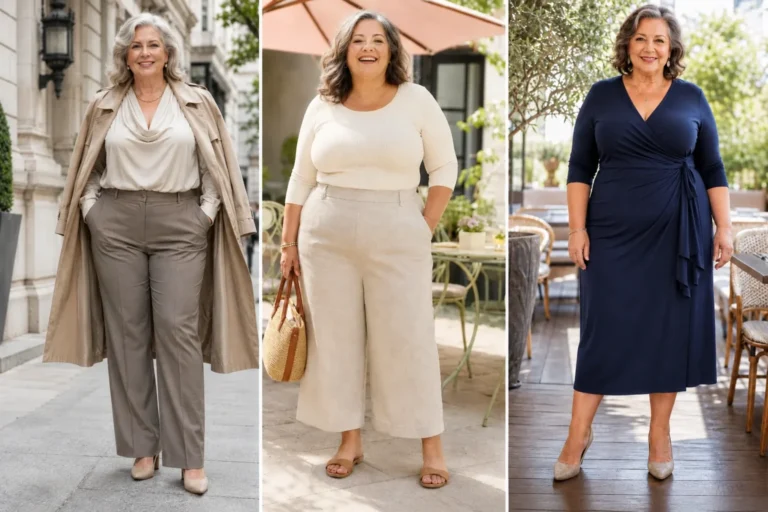
A midi or maxi length creates a long, continuous line that many people love for both comfort and versatility, while a knee-length or fit-and-flare style shows more leg and can feel especially fun for a night out.
Try different lengths against your own frame rather than assuming one is universally better, since proportion reads differently on every height and body.
1
Try on a midi, knee-length, and maxi in the same style.
2
Notice which length you feel most comfortable moving in.
3
Trust how it feels over any general length rule.
7. Color and Pattern Choices
Deep, saturated colors like emerald, burgundy, and navy photograph beautifully and read as polished in almost any setting, while a well-placed pattern, especially one with movement like a diagonal or asymmetric print, can be just as striking as a solid color.
Do not let outdated ideas about which colors or prints someone can wear limit your choices. Wear what genuinely makes you feel good.
Choose colors and prints you genuinely love.
Try a diagonal or asymmetric print for movement.
Following outdated rules about “allowed” colors.
Avoiding a print you love out of habit alone.
8. Shapewear Is a Tool, Not a Requirement
Shapewear can smooth a specific area under a fitted dress if that is the look you are going for on a particular day, but it is entirely optional rather than a requirement for wearing any dress well.
If you do choose to wear it, size up rather than down, since shapewear that is too tight actually creates more visible lines and discomfort than a properly fitted piece.
| Choice | Result |
|---|---|
| No shapewear | Completely valid, especially with structured fabric. |
| Shapewear, sized up | Smooths comfortably without visible lines. |
9. Accessorizing to Complete the Look
A statement necklace, a great pair of earrings, or a well-chosen belt can transform a simple dress into something that feels considered and finished, especially for a dress with a simpler silhouette that has room for a bold accessory.
Shoes matter more than people expect too. A heel elongates the leg line, while a great flat or sneaker can make an entire outfit feel current and easy.
A simple dress with one bold accessory often reads as more intentional than a busy dress with none.
10. Shopping Tips for a Better Fit
Always check a brand’s specific size chart rather than relying on the size you usually wear, since sizing varies significantly between brands and even between different styles from the same brand.
Read the fabric content and care instructions before buying online, and check recent customer reviews for notes on true-to-size fit, since real reviews often reveal fit details a product description leaves out.
- ▸Check the brand’s specific size chart every time.
- ▸Read fabric content before buying online.
- ▸Check recent reviews for true-to-size notes.
11. Common Mistakes to Avoid
Buying a size too small in hopes of fitting into it later almost always leads to a dress that never gets worn and does nothing for how you feel in the meantime.
Skipping the return policy check before buying online is another common misstep, especially with special occasion dresses that need to fit correctly the very first time you wear them.
Final Thoughts
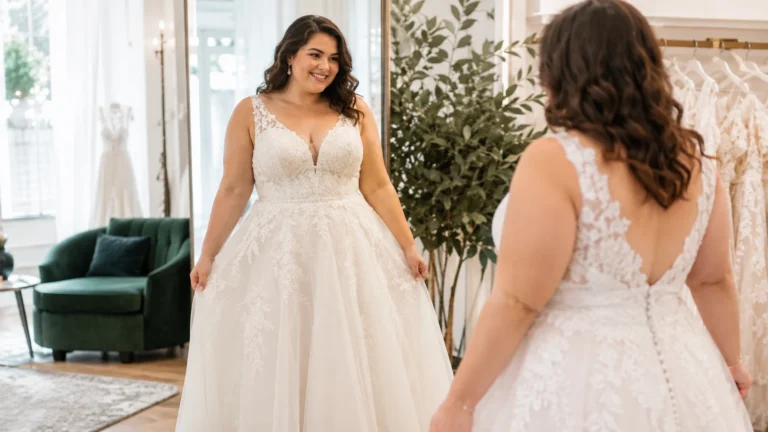
Choosing the right plus size dress really comes down to understanding your own shape, prioritizing fabric and fit over a specific size number, and giving yourself permission to wear whatever silhouette, color, or print actually makes you feel like yourself.
There is no universal rulebook, only what fits well, feels comfortable, and makes you want to wear it again. Use this guide as a starting point, then trust your own eye and comfort level over any rule you read here or anywhere else.
Frequently Asked Questions
What is the most flattering dress silhouette for plus size women?
There is no single most flattering silhouette for every body, though wrap dresses, A-line styles, and empire waists are consistently popular because they define the waist while skimming rather than clinging through the midsection.
Should I size up or down when shopping for a plus size dress?
Always check the specific brand’s size chart rather than your usual size, since sizing varies significantly between brands, and when in doubt between two sizes, sizing up generally gives a more comfortable, better-fitting result than sizing down.
What fabrics work best for plus size dresses?
Fabrics with a small amount of stretch, like ponte knit, scuba fabric, or a quality jersey blend, tend to hold their shape and move comfortably throughout the day compared to very thin or completely rigid fabrics.
Do I need shapewear to wear a fitted dress?
No, shapewear is entirely optional and simply a styling tool some people choose to use for a specific look, not a requirement for wearing any dress style well.