How to Choose a Wedding Dress for Your Body Type

Choosing a wedding dress can turn into an overwhelming scroll through hundreds of styles that all start to blur together, especially when most of what shows up in search results was designed with one specific body type in mind.
The truth is simpler than the wedding industry usually makes it feel: certain silhouettes genuinely work better with certain proportions, and once you know your own, shopping gets a lot less exhausting.
This guide walks through how to choose a wedding dress for your body type, covering hourglass, pear, apple, rectangle, and inverted triangle shapes, along with fabric, sleeves, and the practical fitting details that matter just as much as the silhouette itself.
1. Hourglass Figure: Best Wedding Dress Silhouettes
If your bust and hips measure close to each other with a clearly defined waist, a fit-and-flare or mermaid gown will do most of the work for you here, since both styles are built to follow a waistline that already curves in on its own.
A dress with a fitted bodice and a dropped waist seam tends to photograph beautifully on this shape too. Steer clear of anything with a completely straight, column silhouette, since it can flatten a waistline that is naturally one of your strongest features. Our full guide on dressing an hourglass figure goes deeper into everyday styling for this shape.
2. Pear Shape: Best Wedding Dress Silhouettes
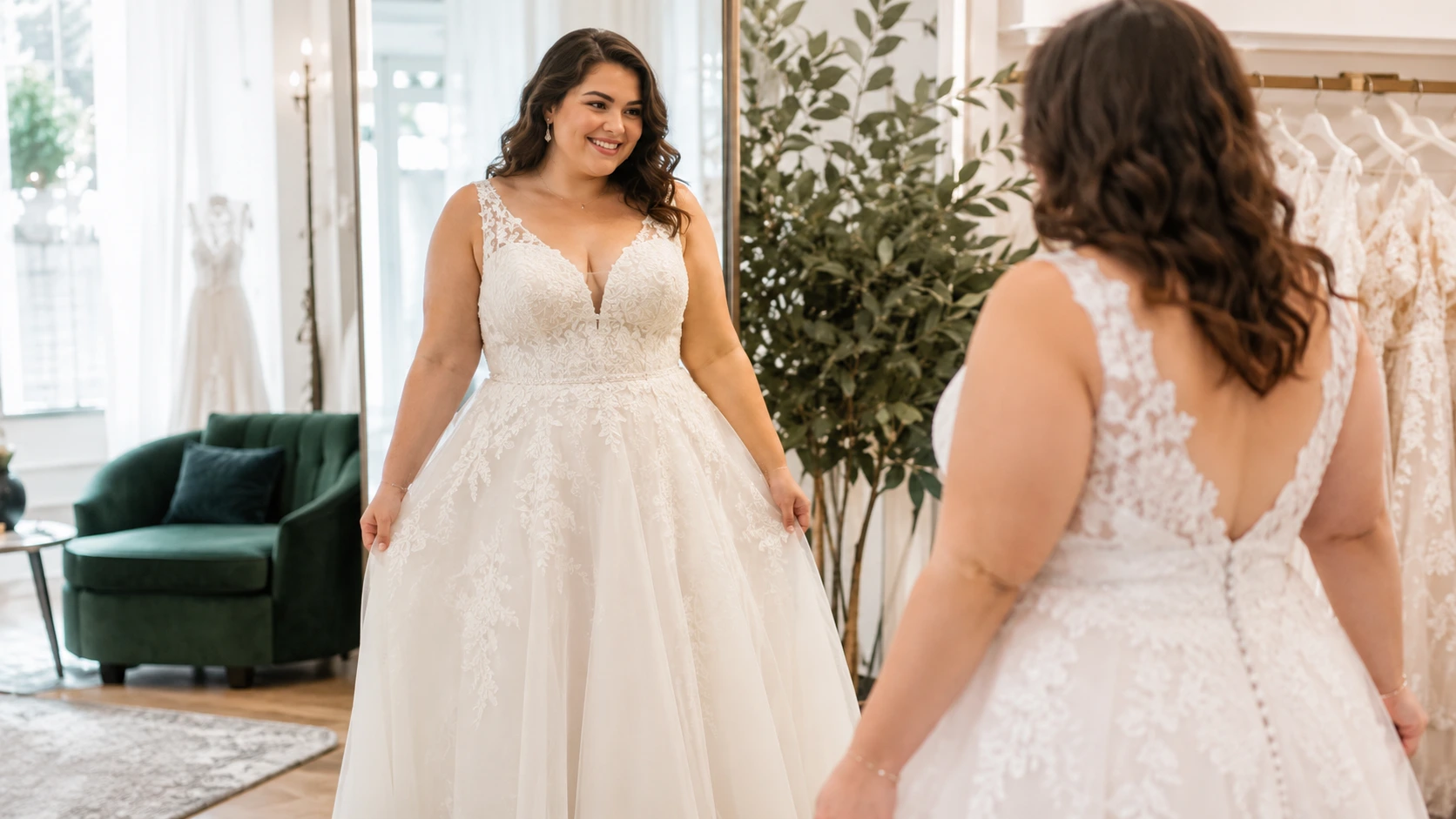
A pear shape carries more width through the hips than the shoulders or bust, and an A-line gown is the classic answer for exactly this reason, since it skims over the hips rather than clinging to them.
A ball gown silhouette works for the same reason on a grander scale. If you want something with less volume, a fit-and-flare style with the flare starting at the hip, rather than the mid-thigh, gives you shape without adding bulk exactly where you already have curve.
💡 Quick Tip
Ask where the flare actually starts on a fit-and-flare gown. A flare that begins at the hip works very differently than one starting at mid-thigh.
3. Apple Shape: Best Wedding Dress Silhouettes
An apple shape tends to carry weight through the midsection with slimmer arms and legs, and an empire waist gown is genuinely one of the most forgiving options here, since the seam sits just below the bust and skims straight down from there.
A-line gowns with some structure through the bodice work well too. What matters most is avoiding anything belted tightly at the natural waist, since that specific detail tends to draw attention to the one area you may want to skim past instead.
Draws the eye right to the midsection.
Skims past it, hangs cleanly to the floor.
4. Rectangle Shape: Best Wedding Dress Silhouettes
A rectangle shape has a bust, waist, and hip measurement that sit fairly close together with less natural waist definition, and this is actually one of the more flexible shapes to dress, since almost any silhouette can work with the right structural details added in.
A ball gown or a dress with a fitted, boned bodice creates waist definition through construction rather than relying on a shape that is already there. A mermaid style with a defined seam does something similar.
Creating waist definition through construction
5. Inverted Triangle: Best Wedding Dress Silhouettes
An inverted triangle carries more width through the shoulders and bust than the hips, and an A-line or ball gown skirt genuinely balances this out by adding volume below the waist to match the width above it.
Avoid a strapless style with a very structured, wide neckline, since it can add even more visual width to shoulders that are already your broadest point. A softer V-neck or sweetheart tends to work better here.
6. Necklines by Body Type
A neckline changes how a gown reads more than almost any other single detail, and the right one really does depend on your shoulders and bust as much as your overall shape.
A sweetheart neckline flatters nearly every body type, which is part of why it shows up so often. Off-the-shoulder styles look stunning but tend to add width, so they suit narrower shoulders better than broader ones.
1
Try a sweetheart neckline first as a safe baseline.
2
Consider your shoulder width before going off-the-shoulder.
3
Photograph yourself in each option under real lighting.
7. Fabric Choices for Comfort on Your Wedding Day
You will likely wear this dress for eight or more hours straight, through a ceremony, photos, and a full reception, so comfort actually matters as much as how the fabric photographs.
Structured fabrics like mikado or duchess satin hold their shape all day without needing much adjustment. Softer fabrics like chiffon or crepe move more naturally and breathe better if your venue runs warm, though they wrinkle more visibly by the end of the night.
Choose mikado or duchess satin for structure.
Choose chiffon or crepe for a warm venue.
Ignoring your venue’s actual temperature.
Choosing fabric based on photos alone.
8. Sleeves and Arm Coverage Options
Sleeves have become far more common on wedding gowns in the last several years, and they are no longer treated as a compromise the way they sometimes used to be.
Long lace sleeves add a romantic, vintage quality to almost any silhouette. Cap sleeves and off-the-shoulder styles give a little coverage without the full commitment. Sleeveless and strapless remain completely valid choices too, especially for a warmer season wedding.
| Sleeve Style | Best Season |
|---|---|
| Long lace sleeves | Fall and winter weddings. |
| Sleeveless or strapless | Spring and summer weddings. |
9. What to Bring to Your Dress Fitting
A few practical items make a real difference at your fitting appointment, and most people do not think to bring them the first time around.
Bring the shoes you actually plan to wear, or at least a heel of the same height, since hem length depends entirely on this. Bring the shapewear you intend to wear underneath too, and a photo of your hair and makeup inspiration if you have one, since neckline and sleeve choices can shift slightly once you see the whole picture together.
- ▸The actual shoes, or a heel of the same height.
- ▸The shapewear you plan to wear underneath.
- ▸A photo of your hair and makeup inspiration.
10. Common Mistakes When Choosing a Wedding Dress
Ordering a dress a full size smaller with plans to lose weight before the wedding is one of the most common regrets bridal consultants mention, since it adds stress to a timeline that already has enough of it.
Skipping the alteration budget is another one. Most gowns need some adjustment regardless of size, and that cost is rarely included in the dress price itself, so it is worth planning for from the start rather than being surprised by it later.
Order for the body you have now, and budget separately for alterations from the very start.
11. Timeline for Ordering and Alterations
Most wedding gowns take four to six months to arrive after ordering, plus another six to eight weeks for alterations once it does, which means starting to shop nine months to a year before the wedding gives you real breathing room.
A shorter timeline is not impossible, but it usually means paying rush fees or choosing from in-stock samples rather than a fully custom order.
Final Thoughts
Choosing a wedding dress for your body type is not about hiding anything. It is about understanding which silhouettes are actually built to work with the proportions you already have, so you spend less time trying on dresses that were never going to move right in the first place.
Start with your general shape, then let neckline, fabric, and sleeve details narrow things down from there. The dress that actually feels right the moment you put it on is usually the answer, no matter what a size tag or style guide says about it. Our guide on how to choose the right plus size dress covers many of these same fit and fabric basics for everyday dressing too.
Frequently Asked Questions
What is the most universally flattering wedding dress silhouette?
The A-line is generally considered the most universally flattering silhouette, since it skims rather than clings through the hips and works with nearly every body type, though it is worth trying on several styles regardless since fit and personal preference matter just as much.
How many wedding dresses should I try on before deciding?
Most bridal consultants suggest trying on somewhere between five and ten dresses across a couple of silhouettes, since trying on too many can actually make it harder to remember which one felt right.
When should I start shopping for my wedding dress?
Nine months to a year before the wedding gives most gowns enough time to arrive and be altered without rush fees, though sample sales and in-stock dresses can work on a shorter timeline if needed.
Should I bring people with me to my dress fitting?
One or two trusted people whose opinions you actually value is usually enough. Bringing a large group can add pressure and conflicting opinions that make the decision harder rather than easier.